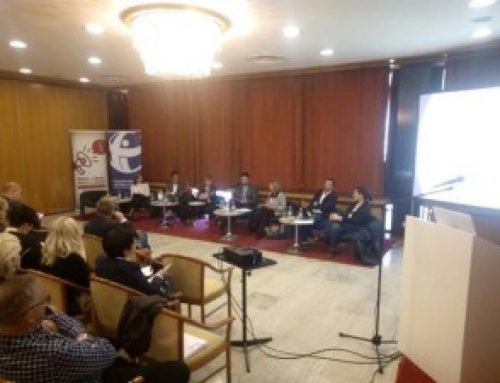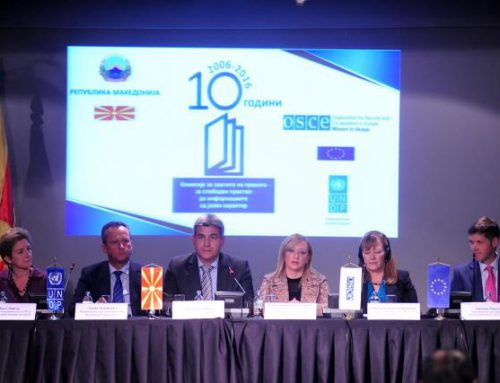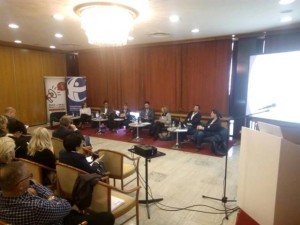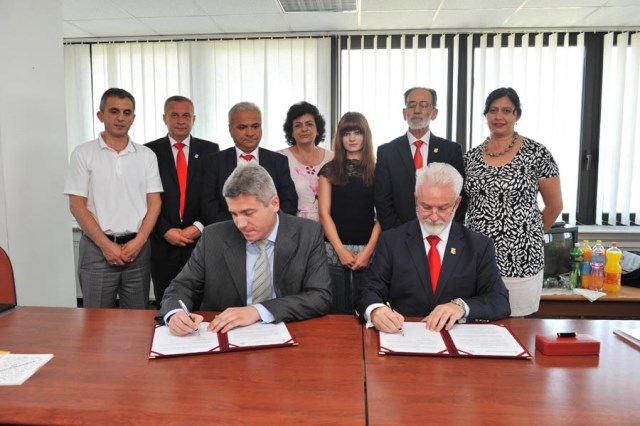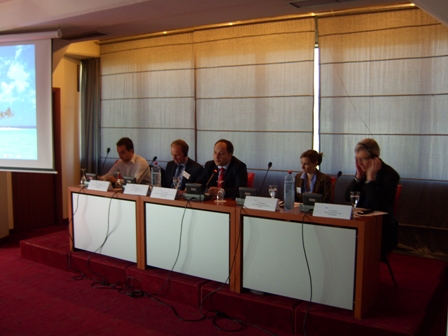
 In the hotel ‘’Arka ‘’ in Skopje, today was held international workshop for the criteria of the harm test to establish the exemptions of the right to free access to public information. The workshop was held by the organization of the European Commission by the TAIEX instrument in cooperation with the Commission for Protection of the Right to Free Access to Public Information. The Commission, with this event gave active contribution by marking the international day for free access to public information ‘’ I have the right to know’’. Along the members of the Commission, the employees in the Secretariat of the Commission , as well the representative from the UK, Republic of Ireland and from the Republic of Slovenia, in the work of this meeting participated also actively participated representatives and officials for the mediation of public information from the Ministry of Justice, General Secretariat from the Government of RM, Secretariat for the establishment of the Framework Agreement, Municipalities in the Republic of Macedonia, Departments for catastar of real estate and other institutions.
Greeting the attendees, the president of the Commission for Protection of the Right to Free Access to Public Information, Mr. Pece Tashevski, expressed verification that the experience of the European experts and their presentations will enable to make comparison for the application of the harm test in the proceeding of requesting access to public information of the institutions, holders of information in Republic Macedonia with the countries from where the guests come. Informing the guests that the past 7 years from the establishment of the Law of the Commission were submitted 2702 complaints, Tashevski pointed that the institutions on making decision for the rejection of the access, they don’t always respect the legal obligation for the establishment of the obliged harm test, because the unsatisfied requesters submit complaint to the Commission. In such cases, stated Tashevski that the Commission, most of the times oblige the institutions to establish the harm test on repeated procedure of making a request, and in some cases the Commission checks if the harm test is correctly made.
Mr. Carl Viper senior officer in the policy of the Commissioner Office for Information of UK, in front of the attendees spoke about the,, Harm test and the test of public interest pursuant to the Act for the Freedom of information and the regulative of the environment’’ Informing them that in their country are submitted several thousand complaints because of the rejection or of the imprecise answered requests, Viper cleared that apart the exemptions contented in the mentioned Act, and other decision made in the other Law, may be the reason for the rejection of the separate request. Viper said that the exemptions are based in class, i.e. concrete type, and they are divided in absolute and qualified exemptions, where in the first one is not required to make harm test, and in the second case its establishment is obliged. The harm and the unwanted effects are decisive for that whether the certain information will be shared with the public said Viper, according who, from these reasons the harm has to be perceptible, and not trivial and speculative. The last word on making decision for the disclosure of separate information in the UK has the Tribunal i.e. Constitutional court, but besides that the Government has the right of Veto of not giving information from the strategic importance that till now has been used in three or four occasions. In this way Viper spoke about the example with the rejected request for that whether the army of Great Britain plans to participate in the war of Irak.
The decision from the aspect of the harm test and the test of public interest contented in the Slovenian Law for access to public information said Mrs. Tina Krajger, from the Office of the Commissioner for information of Republic Slovenia, serving with concrete examples. The Macedonian and Slovenian Law have similarities, because they worked according the identical model. In Slovenia when checking whether information has to be published or to stay unavailable, a harm test is made, and then the test of public interest. According Krajger if some document is draft version which means that is not signed from the Commissioner, it’s not necessary to make review of public because it will have misunderstanding.
The inspector of the Commissioner Office for information of Republic Ireland Mr. Derek Charles, referred to the Irish Law for the freedom of information and the harm test. He informed that in its country are registered 500 holders- state bodies, local and public bodies, hospitals and television stations, and the requesters to gain information are obligated to pay from 15 to 150 euro which it depends whether is a matter of personal or common information. The Commissioner is independent in its making decision and its decisions are obliged also for the requesters and holders, which it’s regardless because the means obtains the Government. The complaint is allowed to the Supreme Court, but there some exemptions based on class and harm, regulated according to more standards and ways contained in several departments from the Law.
EXCHANGED EXPERIENCES FOR THE CRITERIA OF THE HARM TEST
About the Author: komspi komspi